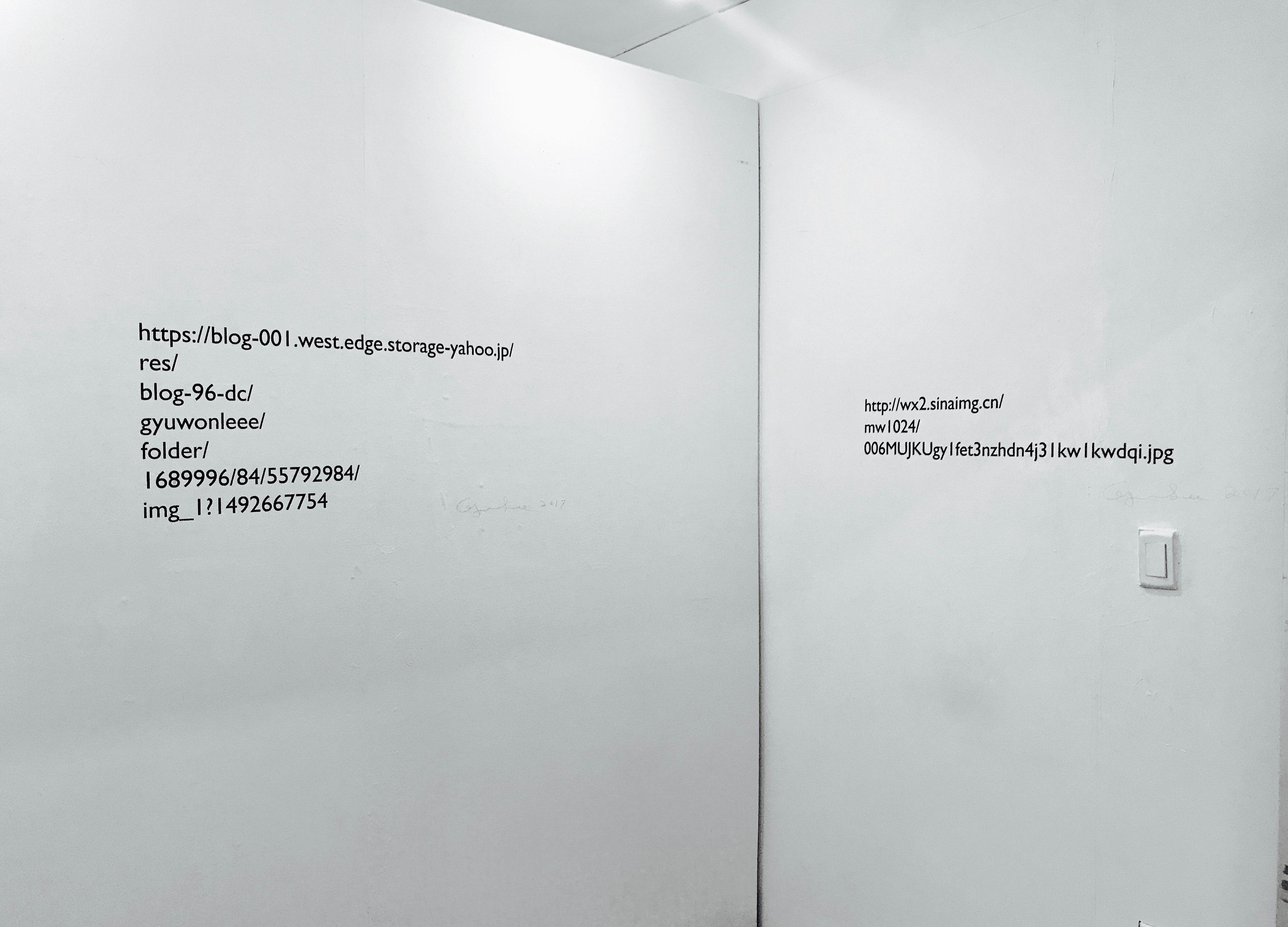
Before the Bridge
‘Made in Korea’ 시리즈는 ‘한국은 미국, 중국, 일본의 영향을 받은 것이 아닐까?’란 질문을 던지는 작품들로 구성되었다. 이 작품들은 역사적·지정학적인 사실을 바탕으로 하며, ‘차용’이란 방식을 통해 미국, 중국, 일본의 특징적인 이미지들의 조합만 볼 수 있다. 하지만 시리즈 타이틀을 ‘Made in Korea’로 함으로서 역설적인 표현으로 한국을 이야기한다.
현시점에서 ‘THAAD’ 문제로 중국과 미국 사이에서 갈팡질팡 하고 있는 모습이나 ‘위안부’ 문제로 일본과 갈등을 빚고 있는 모습은 안타깝지만 내가 작품에서 말하는 한국과 닮아 있다고 생각한다.
또한, 이것은 마치 이 시리즈를 구상했을 2011년 당시, 우리 가족을 보는 것과 같았다. 우리 가족은 모두 한국인인 것이 분명하지만, 그 누구도 한국에 있지 않았다. 부모님은 중국 상하이에, 동생은 일본에(현재는 미국에), 그리고 나는 영국에 있었다. 나는 이런 아이러니한 상황이 작품에서 볼 수 있는 역설적 표현 방식의 원인이 되지 않았을까 생각했다.
‘Made in Korea’ 시리즈 작품들은 인터넷에서 정보를 수집하고 포토샵을 이용해 드로잉을 한 후, 그것을 바탕으로 전통적인 방식인 유화로 그리는 제작과정을 거친다. 그리고 완성된 작품의 디지털 이미지를 나의 개인 웹사이트에 저장한다.
나는 문득 당연하게 생각했던 이런 일련의 과정 속에서 유화 작품을 제작하기 위한 포토샵 이미지나 그 작품의 완성 후 만들어진 디지털 이미지, 그리고 더 나아가서 그 디지털 이미지가 저장된 웹사이트 주소 역시 그것으로써 ‘독립된 작품’이 될 수도 있지 않을까? 하는 의문이 생겼다.
지난 가을에 있었던 개인전 ‘Hommage to Kosuth’는 ‘Made in Korea’ 시리즈를 원본이라 부를 수 있는 유화 작품들과 위의 제작 과정을 함께 선보였는데, 전시 구성 방식에 있어서 조셉 코수스(Joseph Kosuth)의 1965년 작품 <하나이면서 세 개의 의자(One and Three Chairs)>를 차용했다.
알려진 대로 코수스는 ‘의자’라는 실제 사물과 그것을 찍은 사진 이미지 그리고 의자에 대한 사전적 정의를 함께 제시함으로써 개념미술의 포문을 열었다. 나는 코수스의 ‘의자’와 상응하는 것을 유화 작품으로 보고, 작품의 원본성(originality)이 공격받는 그 제작 과정에 주목하고자 했다. 전시장 벽에는 (아마도 최후까지) 원본의 아우라를 갖는 유화 작품과 애초에 그 원본을 제작 하기 위해 존재했지만, 이제는 원본의 ‘복제’처럼 느껴지는 포토샵 드로잉 이미지가 나란히 걸렸다. 여기서 주목할 것은 원본의 이미지를 포함하는 웹사이트 주소 및 QR코드도 함께 표기됐다는 점이다. 정체불명의 문자와 기호로 시각화된 텍스트는 관객이 복제된 원본의 이미지를 소유할 수 있게 도와준다. 원본과 복제의 모호해진 경계에 일조하는 웹주소나 QR코드가 갖는 이러한 기능은 동시대 미술이 담보한 텍스트의 개념적 확장으로도 볼 수 있을 것이다.
‘Made in Korea’ 시리즈는 ‘한국은 미국, 중국, 일본의 영향을 받은 것이 아닐까?’란 질문을 던지는 작품들로 구성되었다. 이 작품들은 역사적·지정학적인 사실을 바탕으로 하며, ‘차용’이란 방식을 통해 미국, 중국, 일본의 특징적인 이미지들의 조합만 볼 수 있다. 하지만 시리즈 타이틀을 ‘Made in Korea’로 함으로서 역설적인 표현으로 한국을 이야기한다.
현시점에서 ‘THAAD’ 문제로 중국과 미국 사이에서 갈팡질팡 하고 있는 모습이나 ‘위안부’ 문제로 일본과 갈등을 빚고 있는 모습은 안타깝지만 내가 작품에서 말하는 한국과 닮아 있다고 생각한다.
또한, 이것은 마치 이 시리즈를 구상했을 2011년 당시, 우리 가족을 보는 것과 같았다. 우리 가족은 모두 한국인인 것이 분명하지만, 그 누구도 한국에 있지 않았다. 부모님은 중국 상하이에, 동생은 일본에(현재는 미국에), 그리고 나는 영국에 있었다. 나는 이런 아이러니한 상황이 작품에서 볼 수 있는 역설적 표현 방식의 원인이 되지 않았을까 생각했다.
‘Made in Korea’ 시리즈 작품들은 인터넷에서 정보를 수집하고 포토샵을 이용해 드로잉을 한 후, 그것을 바탕으로 전통적인 방식인 유화로 그리는 제작과정을 거친다. 그리고 완성된 작품의 디지털 이미지를 나의 개인 웹사이트에 저장한다.
나는 문득 당연하게 생각했던 이런 일련의 과정 속에서 유화 작품을 제작하기 위한 포토샵 이미지나 그 작품의 완성 후 만들어진 디지털 이미지, 그리고 더 나아가서 그 디지털 이미지가 저장된 웹사이트 주소 역시 그것으로써 ‘독립된 작품’이 될 수도 있지 않을까? 하는 의문이 생겼다.
지난 가을에 있었던 개인전 ‘Hommage to Kosuth’는 ‘Made in Korea’ 시리즈를 원본이라 부를 수 있는 유화 작품들과 위의 제작 과정을 함께 선보였는데, 전시 구성 방식에 있어서 조셉 코수스(Joseph Kosuth)의 1965년 작품 <하나이면서 세 개의 의자(One and Three Chairs)>를 차용했다.
알려진 대로 코수스는 ‘의자’라는 실제 사물과 그것을 찍은 사진 이미지 그리고 의자에 대한 사전적 정의를 함께 제시함으로써 개념미술의 포문을 열었다. 나는 코수스의 ‘의자’와 상응하는 것을 유화 작품으로 보고, 작품의 원본성(originality)이 공격받는 그 제작 과정에 주목하고자 했다. 전시장 벽에는 (아마도 최후까지) 원본의 아우라를 갖는 유화 작품과 애초에 그 원본을 제작 하기 위해 존재했지만, 이제는 원본의 ‘복제’처럼 느껴지는 포토샵 드로잉 이미지가 나란히 걸렸다. 여기서 주목할 것은 원본의 이미지를 포함하는 웹사이트 주소 및 QR코드도 함께 표기됐다는 점이다. 정체불명의 문자와 기호로 시각화된 텍스트는 관객이 복제된 원본의 이미지를 소유할 수 있게 도와준다. 원본과 복제의 모호해진 경계에 일조하는 웹주소나 QR코드가 갖는 이러한 기능은 동시대 미술이 담보한 텍스트의 개념적 확장으로도 볼 수 있을 것이다.
The Bridge
우리는 출근하면서 스마트폰으로 뉴스를 보고, 컴퓨터로 일을 한다. 그리고 자기 전까지 소셜 미디어를 통해서 자신을 드러내고 (가상의)친구들과 소통(하길 원)한다.
이런 것들은 언제부터인가 너무나도 자연스러운 일상이 되었다.
이것은 20여년 전에 인터넷이 대중화되고, 10여년 전부터 누구나 스마트폰을 사용하게 되면서 가능해 졌는데, 결국 수많은 정보가 인터넷 공간에서 생산되고, 그곳에 존재하고, 또 재생산되기 때문이라고도 볼 수 있다.
나의 기존의 작품인 ‘Made in Korea’ 시리즈는 인터넷에서 정보를 수집하고 포토샵을 이용해 드로잉을 한 후, 그것을 바탕으로 전통적인 방식인 유화로 그리는 제작과정을 거친다. 그리고 완성된 작품의 디지털 이미지를 나의 개인 웹사이트에 저장한다.
이런 과정 속에서 자연스럽게 그 디지털 이미지란 정보의 웹 주소, 조금 더 정확하게는 URL(Uniform Resource Locator)은 생성된다.
URL은 온라인 상에서 정보를 가지고 있는 공간으로 연결 시켜주는, 또는 말 그대로 가상 공간에 존재하는 정보의 위치, 주소이다. 그런데 나는 언어의 특성을 생각해봤을 때, 그리고 URL의 형태-알파벳, 숫자, 기호로 이뤄진-를 봤을 때, 그것이 단순히 다리 역할만 하는 것인지 의문이 생길 수밖에 없었다.
유화(원본성이 있는)의 제목과 사이즈, 재료 등등의 정보를 전부 가지고 있지만, 동시에 URL은 그 정보들(디지털 이미지와 작품 제목, 사이즈, 재료 등등 전부)로 연결시켜주는 다리가 될 수도 있고, 또는 그것을 지칭하는 주소, 또는 ‘이름’이 된다고도 볼 수 있다. 그렇다면 지금 이 시대에는 유화라는 정보가 있는 URL도 그것 대로 독립적인 작품이 될 수 있지 않을까?
결국, 나는 단순히 알파벳, 기호, 숫자의 형태로만 이뤄진 너무나도 익숙하지만(하루에도 수백만개가 생성되고 사라진다) 동시에 그 형태의 익숙하지않은 조합 때문에 이해하기 힘든 ‘언어’인 URL을 작품으로서 인정할 수밖에 없었다.
인터넷 공간에서의 정보들은 복제 그리고 재생산이 너무나도 쉽다.
이번 작품에서 흥미로운 지점은 같은 유화 작품의 디지털 이미지를 어떤 인터넷 공간(웹서비스 회사)에 저장하느냐에 따라서 그 정보는 동일하지만 그 형태(URL의 텍스트 형태)가 달라진다.
그렇다면 분명 완벽하게 동일한 정보(이미지)이지만 언어(텍스트)의 형태가 달라지면 그것을 과연 복제된 것이라고 볼 수 있을까? 동시에 그렇다면 다른 형태의 URL은 원본성을 갖게 되는 것이 아닌가란 질문도 떠올릴 수밖에 없다.
이 프로젝트는 현재진행형이다. 작품의 표현 방식만 보면 전혀 다른 이야기를 하는 것 같지만 이것도 결국에는 내가 기존에 해오던 ‘Made in Korea’ 시리즈에서 하고자하는 이야기-이 세상에 완벽하게 새로운 것이 존재할까? 과연 원본성의 기준은 어디에 있는가?-와 같은 맥락 속에 있는 것이 아닌가 싶다.
Before the Bridge
Made in Korea series is composed of works that pose the question:
“Is Korea shaped by the influence of the United States, China, and Japan?”
These works are based on historical and geopolitical realities and employ the method of appropriation, presenting only combinations of characteristic images from the United States, China, and Japan. However, by titling the series Made in Korea, the works paradoxically speak about Korea itself.
“Is Korea shaped by the influence of the United States, China, and Japan?”
These works are based on historical and geopolitical realities and employ the method of appropriation, presenting only combinations of characteristic images from the United States, China, and Japan. However, by titling the series Made in Korea, the works paradoxically speak about Korea itself.
At the present moment, Korea’s unstable position between China and the United States regarding the THAAD issue, as well as its ongoing conflict with Japan over the “comfort women” issue, is unfortunate. Yet I cannot help but feel that these situations closely resemble the Korea depicted in my work.
This paradox also reminded me of my own family situation when I first conceived the series in 2011. Although my entire family was undoubtedly Korean, none of us were living in Korea at the time. My parents were in Shanghai, China; my younger sibling was in Japan (and is now in the United States); and I was living in the United Kingdom. I came to believe that this ironic situation may have influenced the paradoxical mode of expression present in my work.
The Made in Korea series follows a specific production process. I collect information from the internet, create drawings using Photoshop, and then translate these into oil paintings using a traditional painting method. Once completed, the digital images of the paintings are stored on my personal website.
At some point, within this seemingly self-evident process, a question emerged: could the Photoshop image created to produce an oil painting, the digital image generated after the painting is completed, and even the website address where that digital image is stored, each become an independent artwork in itself?
My solo exhibition Hommage to Kosuth, held last fall, presented both the oil paintings—considered the “originals” of the Made in Korea series—and the processes that led to their production. The exhibition structure appropriated Joseph Kosuth’s 1965 work One and Three Chairs.
As is well known, Kosuth presented a physical chair, a photograph of the chair, and a dictionary definition of the word “chair,” thereby opening the door to conceptual art. In my exhibition, I regarded the oil painting as the equivalent of Kosuth’s “chair” and focused on the production process in which the originality of the artwork is challenged. On the gallery wall, the oil painting—still possessing the aura of the original (perhaps until the very end)—was displayed alongside the Photoshop drawing, which originally existed solely to produce the painting but now appeared as a kind of reproduction of the original.
What is important here is that the website address and QR code containing the image of the original work were also presented. This text, visualized as an obscure combination of characters and symbols, allows the audience to possess the reproduced image of the original. The function of the web address and QR code—contributing to the blurred boundary between original and reproduction—can be understood as a conceptual expansion of text within contemporary art.
The Bridge
We read the news on our smartphones on the way to work and use computers to perform our daily tasks. Until we go to sleep, we present ourselves through social media and (wish to) communicate with (virtual) friends. These actions have become an entirely natural part of everyday life.
This has been made possible by the popularization of the internet over twenty years ago and the widespread use of smartphones over the past decade. Ultimately, it is because vast amounts of information are produced, exist, and are endlessly reproduced within the space of the internet.
My earlier Made in Korea series follows a process in which I gather information online, create drawings in Photoshop, translate them into oil paintings using a traditional method, and then store the completed paintings as digital images on my personal website. Within this process, a web address for the digital image—more precisely, a URL (Uniform Resource Locator)—is naturally generated.
A URL connects us to a space online where information exists; in other words, it is the location or address of information in virtual space. However, when considering the nature of language and the form of a URL—composed of letters, numbers, and symbols—I could not help but question whether it merely functions as a bridge.
A URL contains all the information of an oil painting—its title, size, materials, and digital image—while simultaneously acting as a bridge that leads to that information. It can also be understood as an address, or even a “name,” that refers to it. If so, in our current era, could a URL that contains the information of an oil painting itself become an independent artwork?
Ultimately, I was compelled to recognize the URL as a work of art: a language composed solely of letters, numbers, and symbols—utterly familiar, as millions are created and disappear every day, yet difficult to comprehend due to its unfamiliar combinations.
Information in internet space is easily copied and reproduced. One intriguing aspect of this project is that although the digital image of an oil painting remains identical, the form of its URL—the textual structure—changes depending on which internet space or web service it is stored in.
If the information (the image) is perfectly identical, but the language (the text) takes a different form, can it truly be considered a reproduction? At the same time, does a different URL not acquire its own form of originality?
This project is ongoing. Although its form of expression may appear entirely different, it ultimately remains connected to the same questions I have explored through the Made in Korea series:
Does anything truly new exist in this world, and where does the criterion of originality lie?
Does anything truly new exist in this world, and where does the criterion of originality lie?
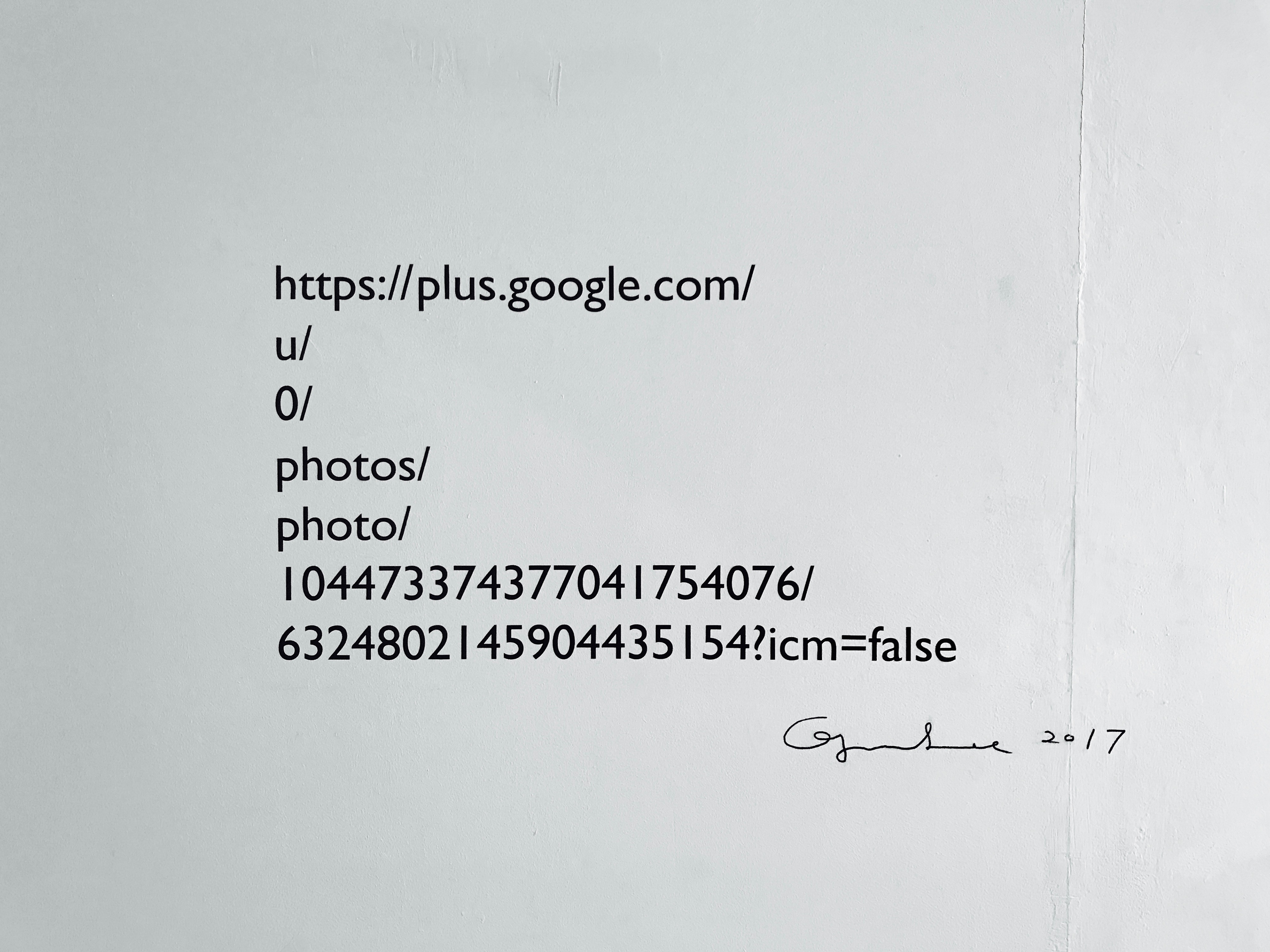
A Girl in the Trap, Sheet Paper, Dimensions Variable, 2017
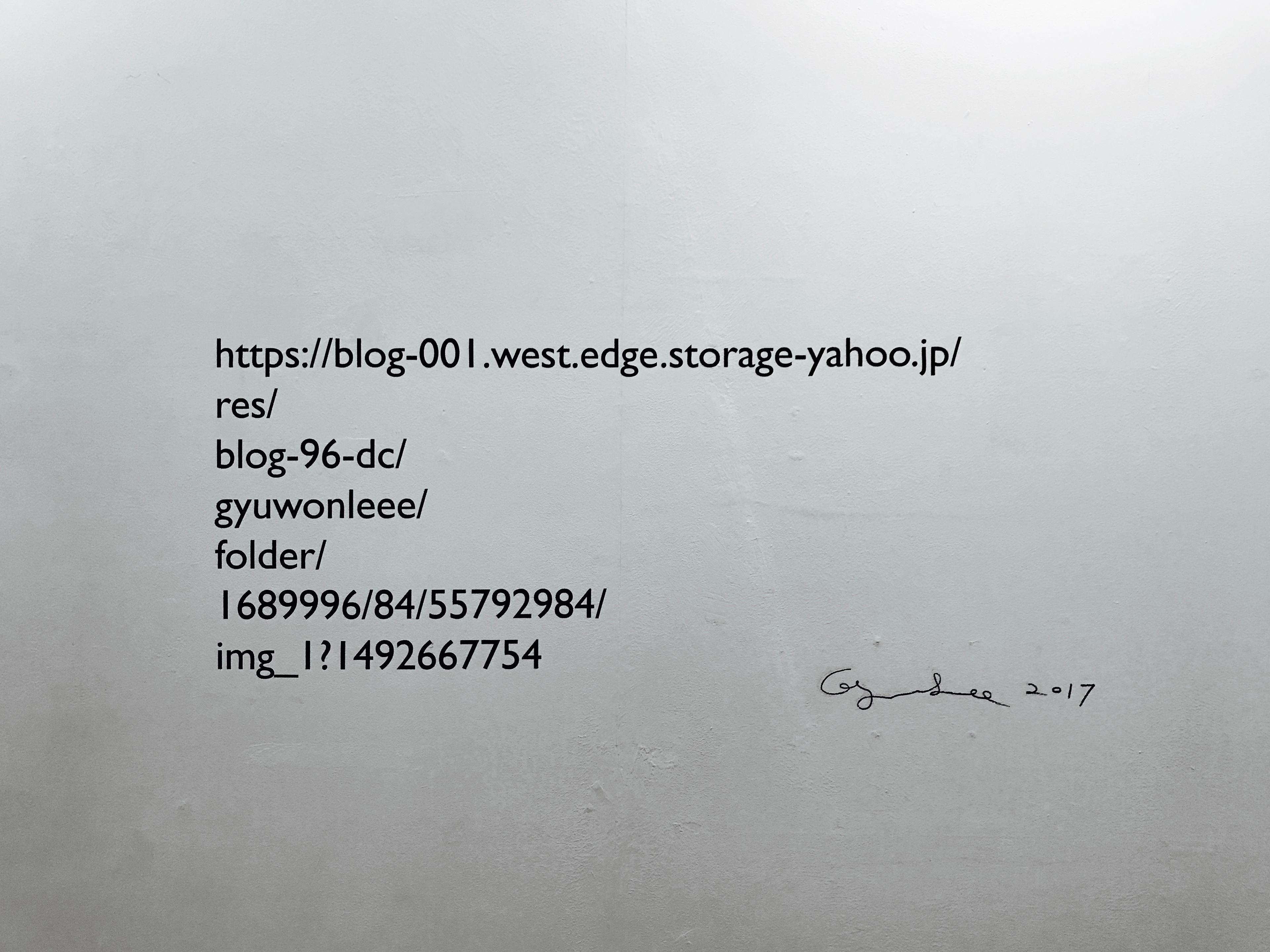
A Girl in the Trap, Sheet Paper, Dimensions Variable, 2017
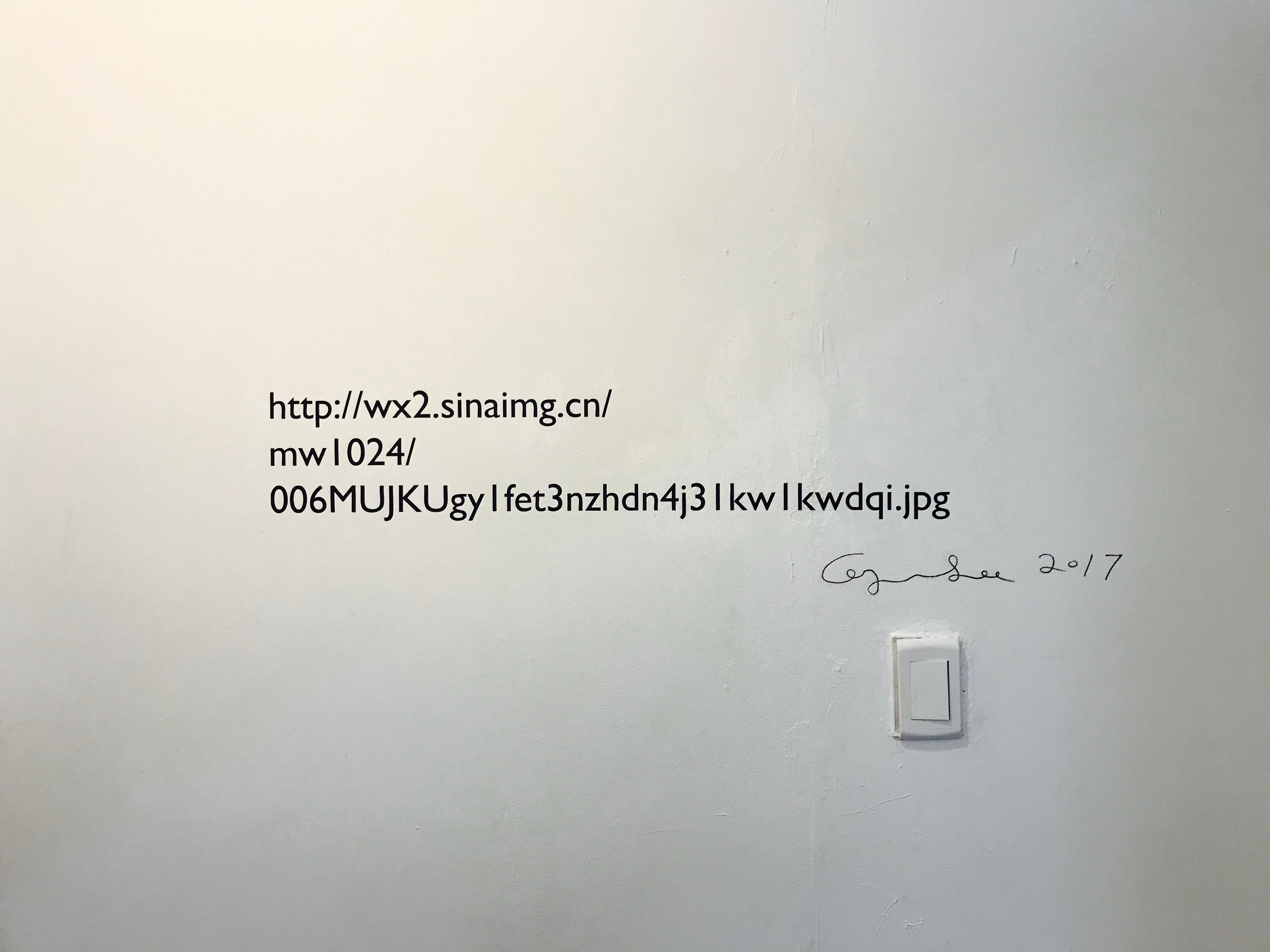
A Girl in the Trap, Sheet Paper, Dimensions Variable, 2017
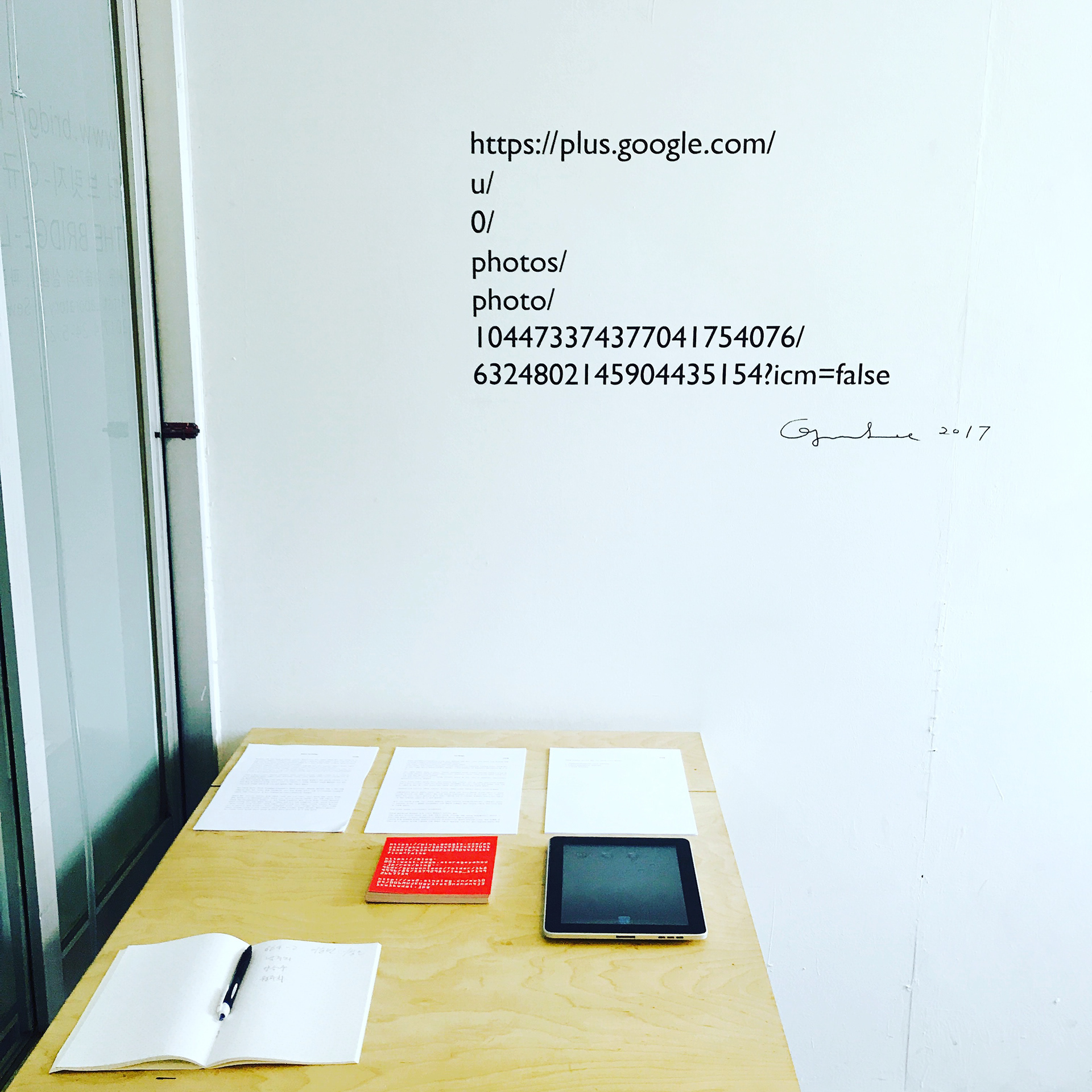
The Bridge @Space_bar 421, Seoul, South Korea, 2017